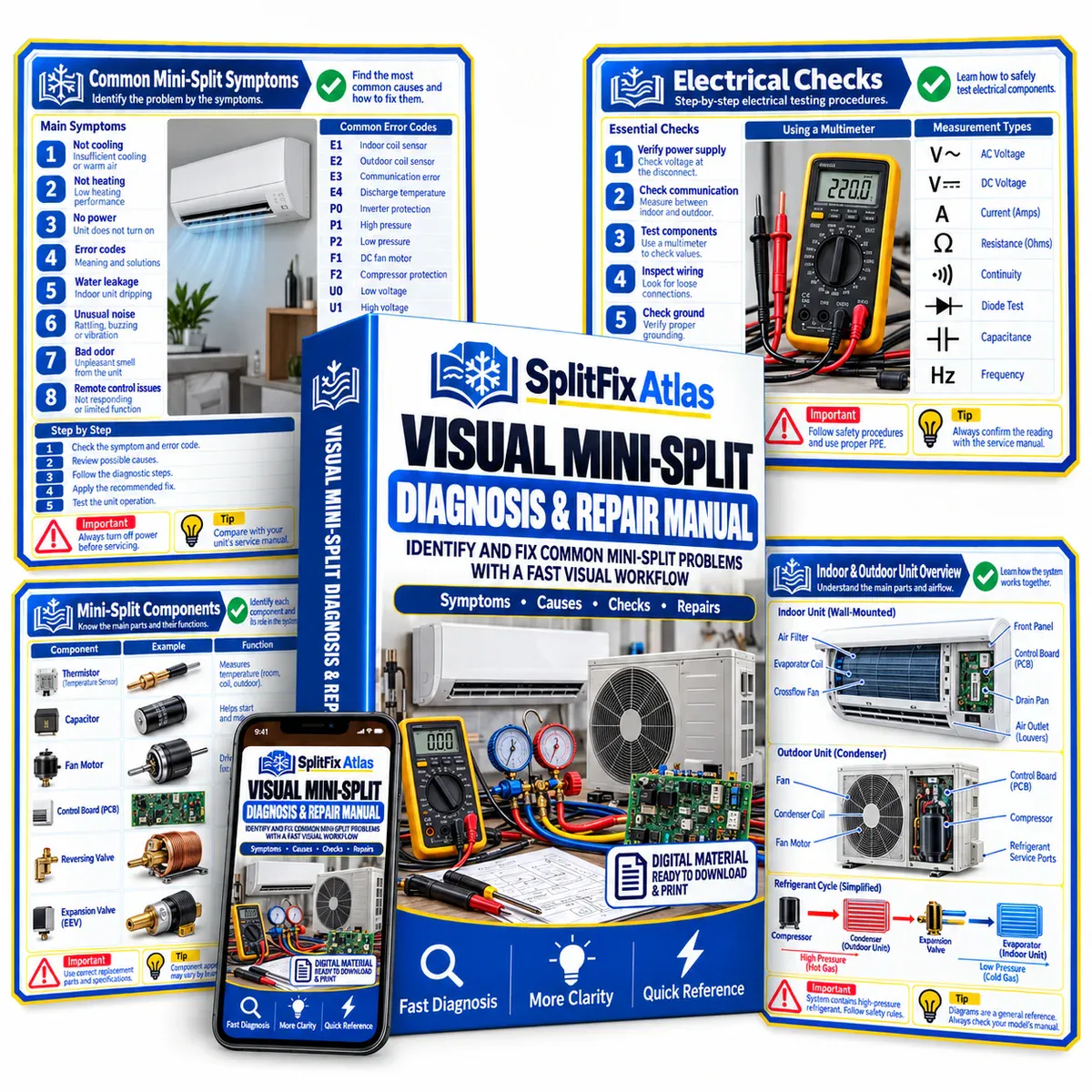
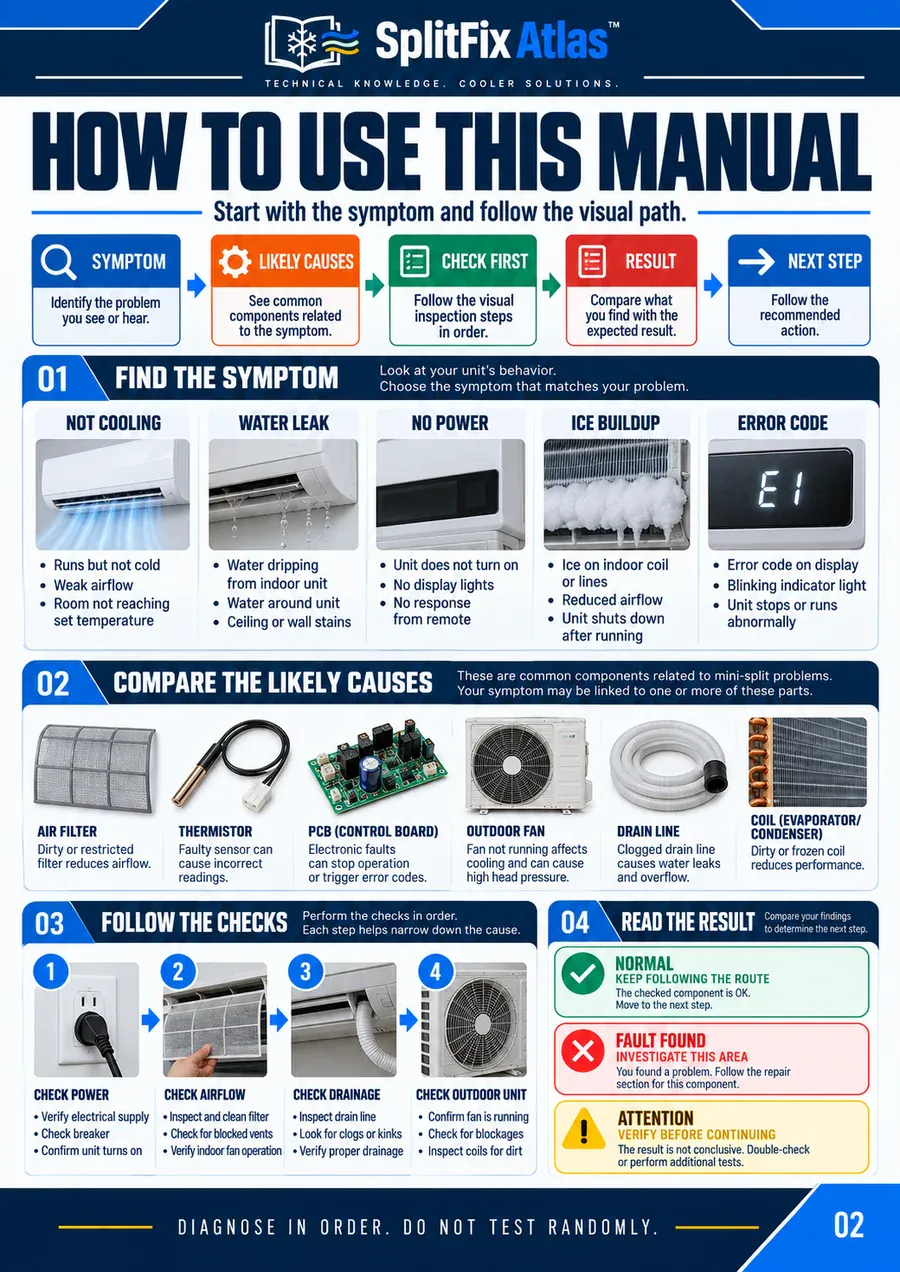
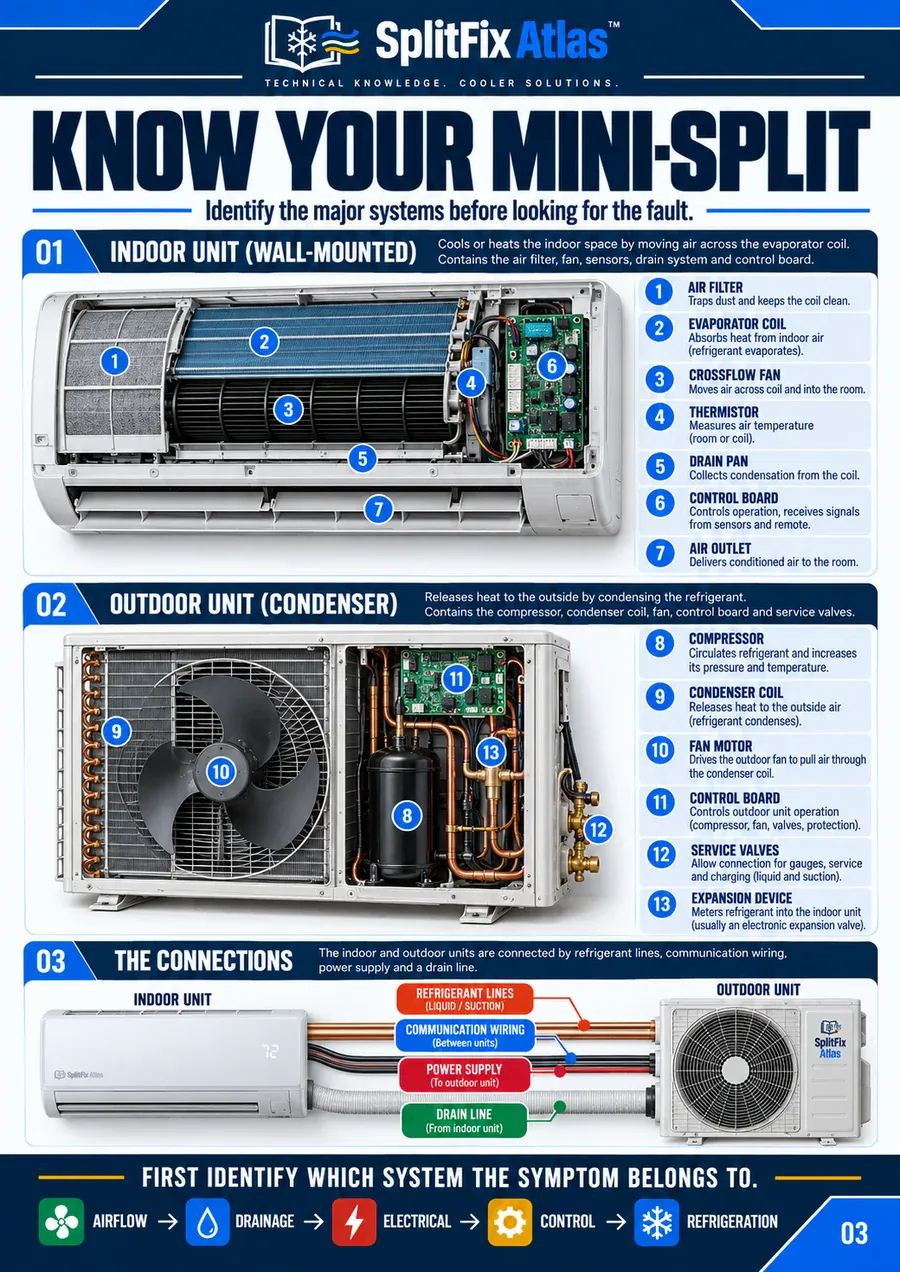
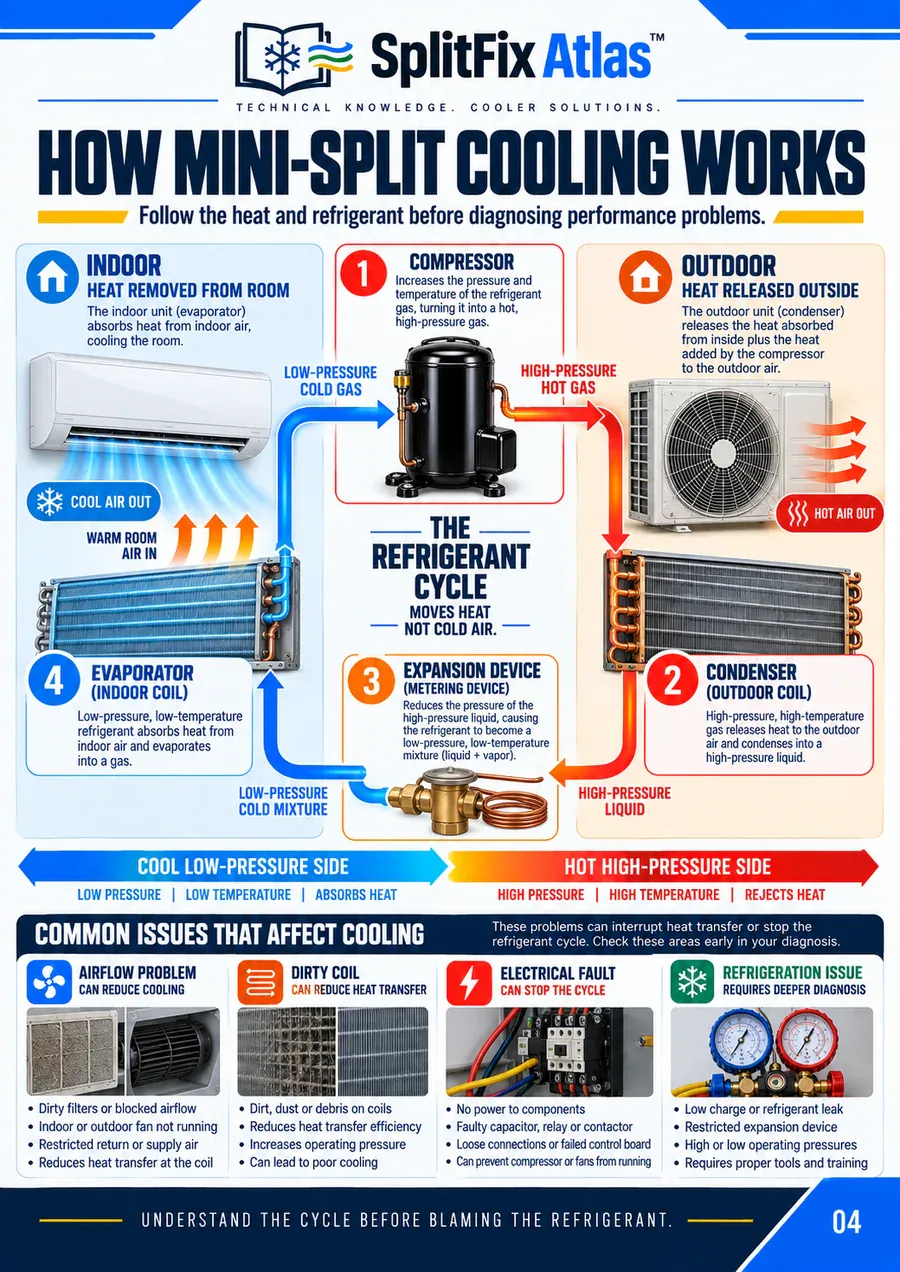
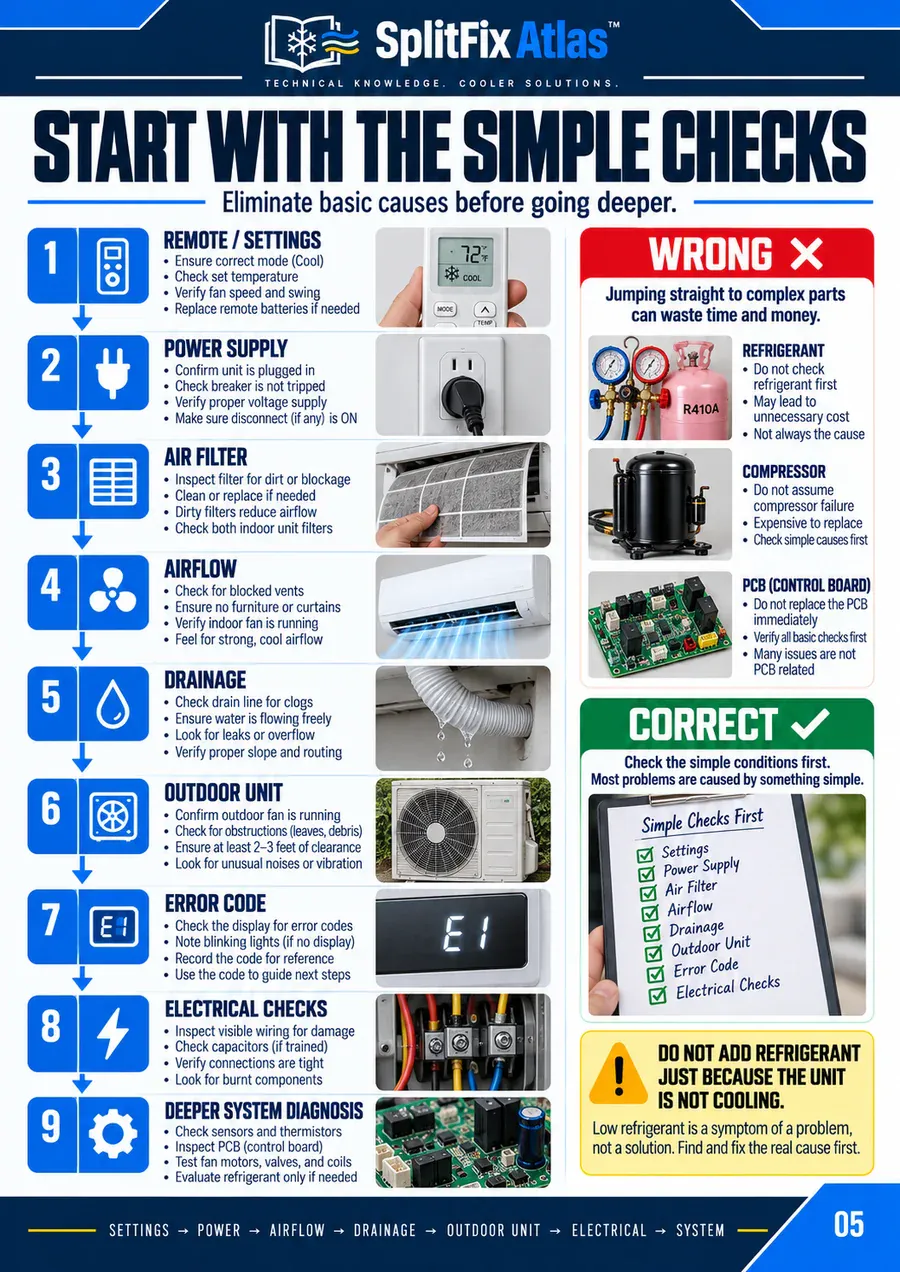
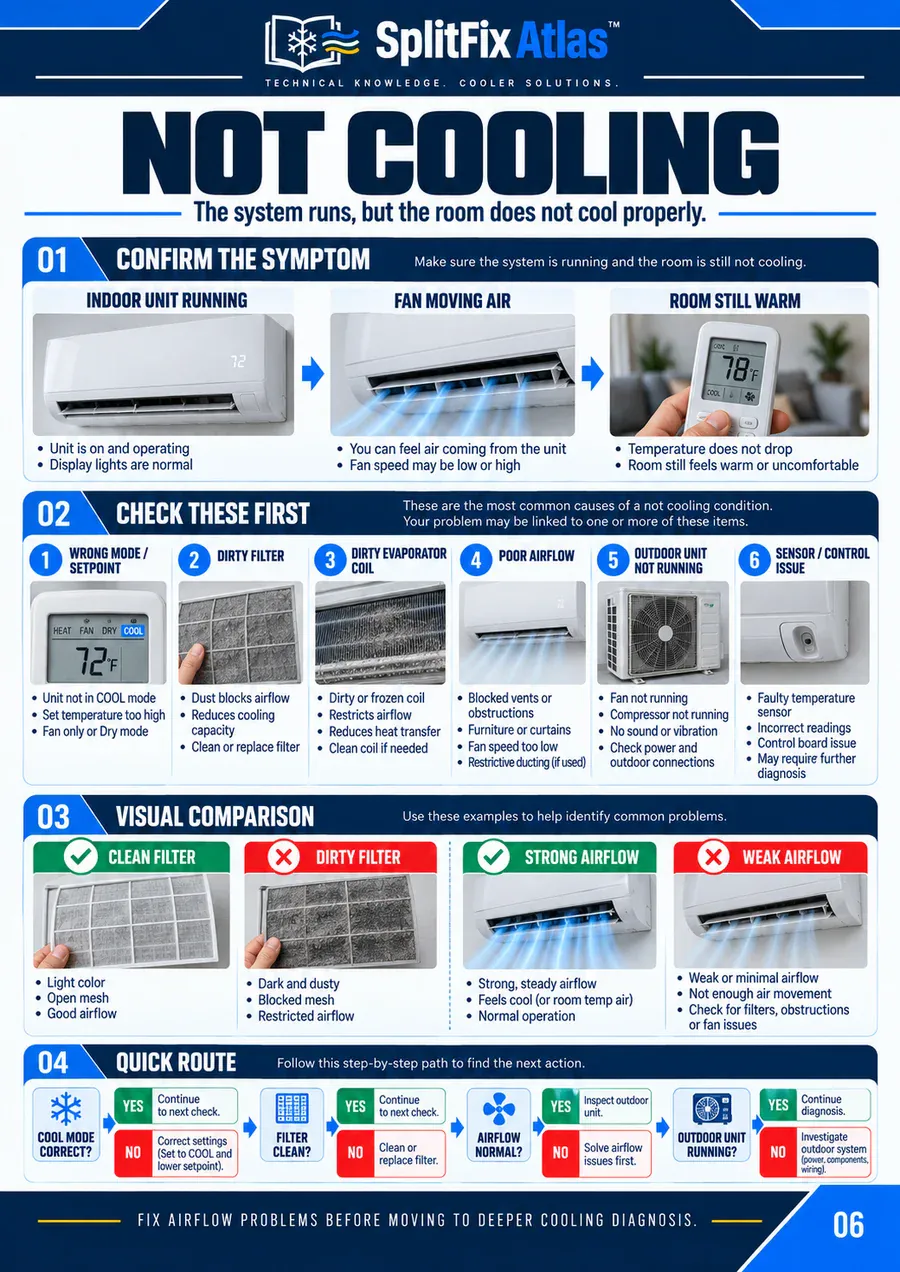
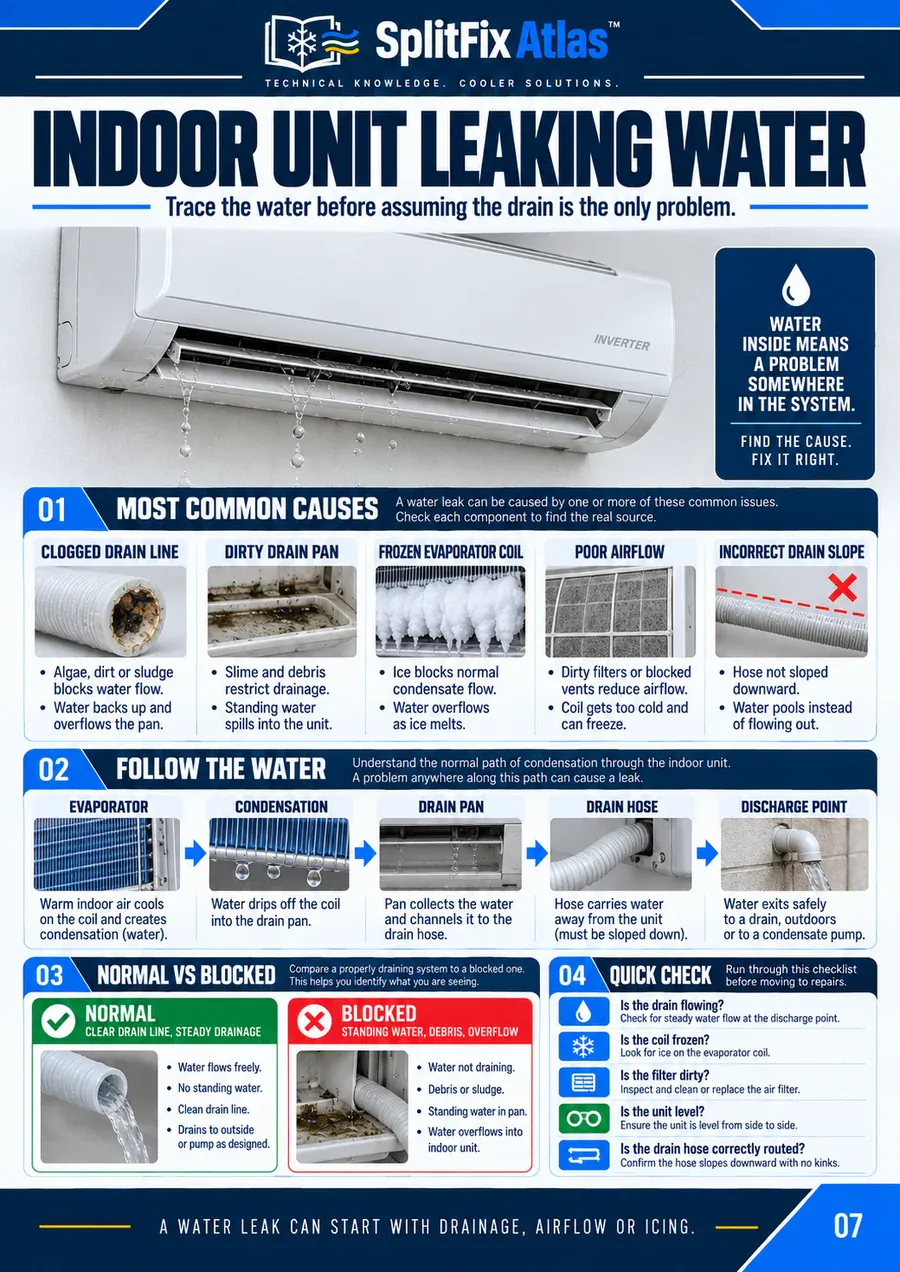
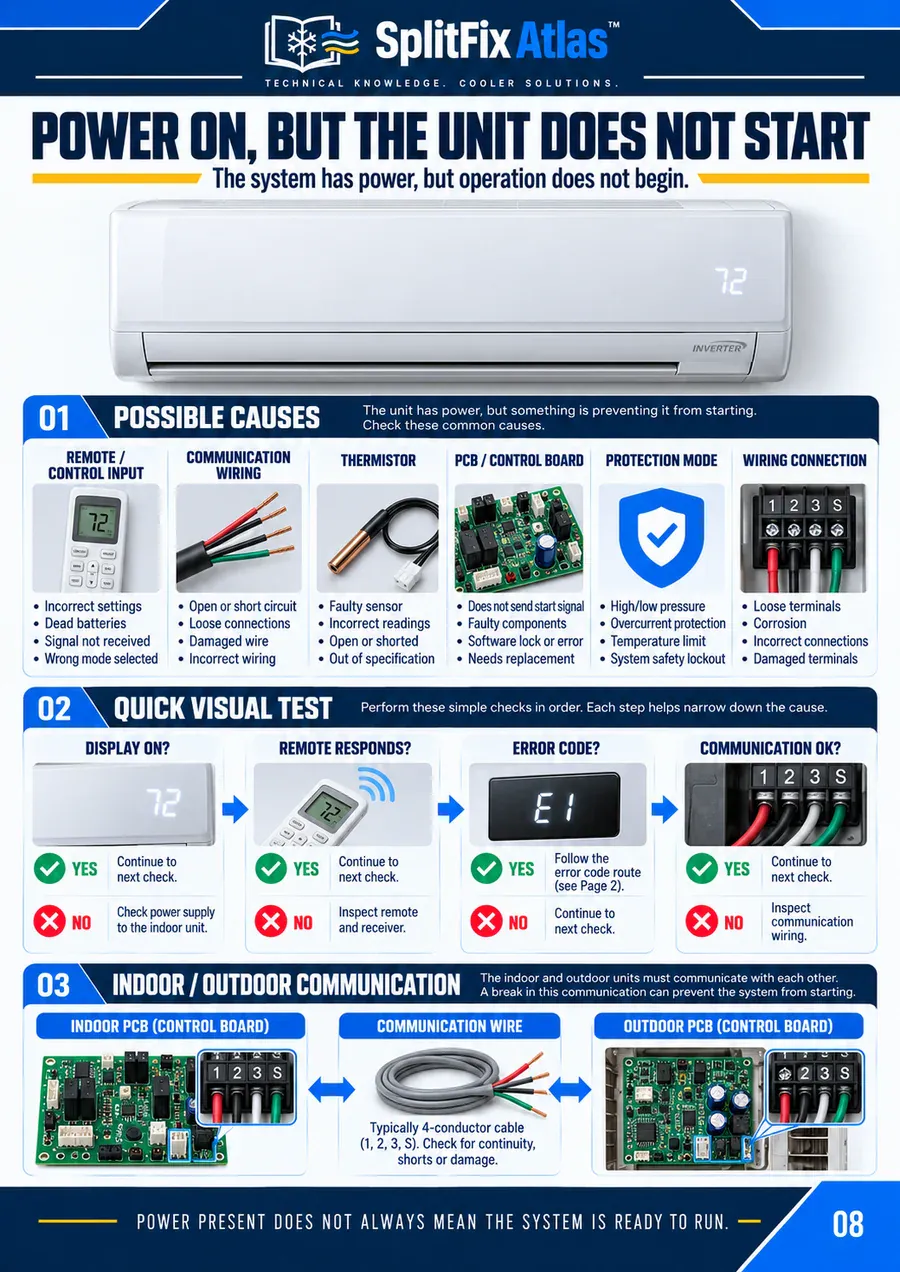
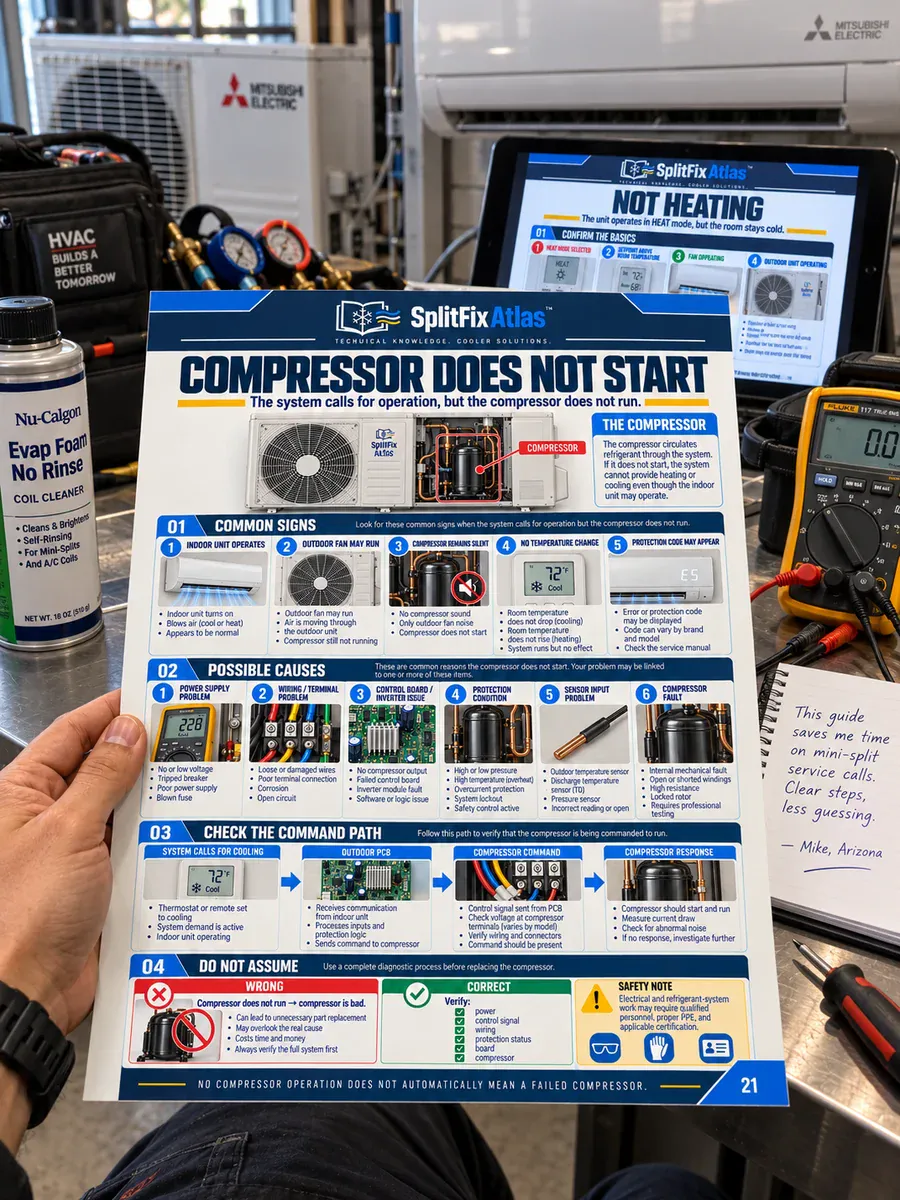
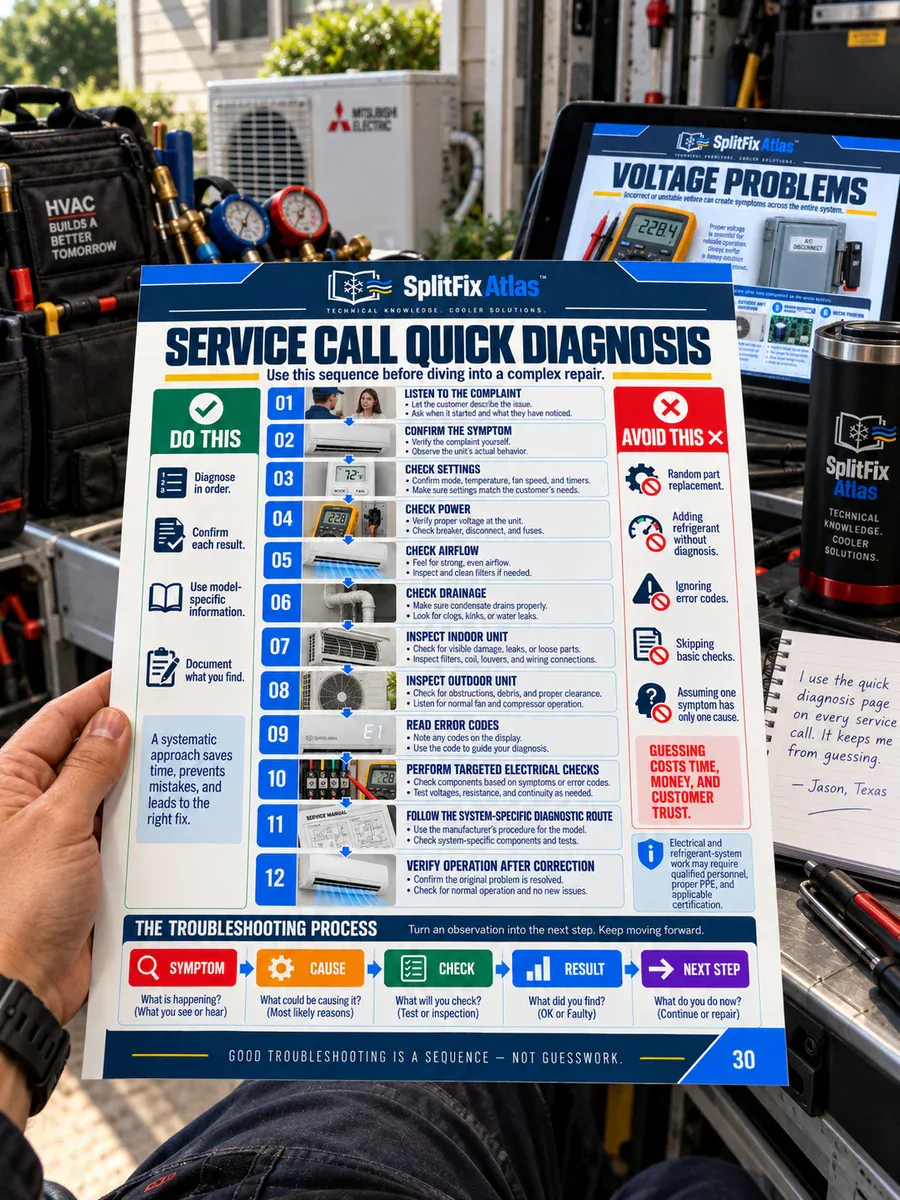
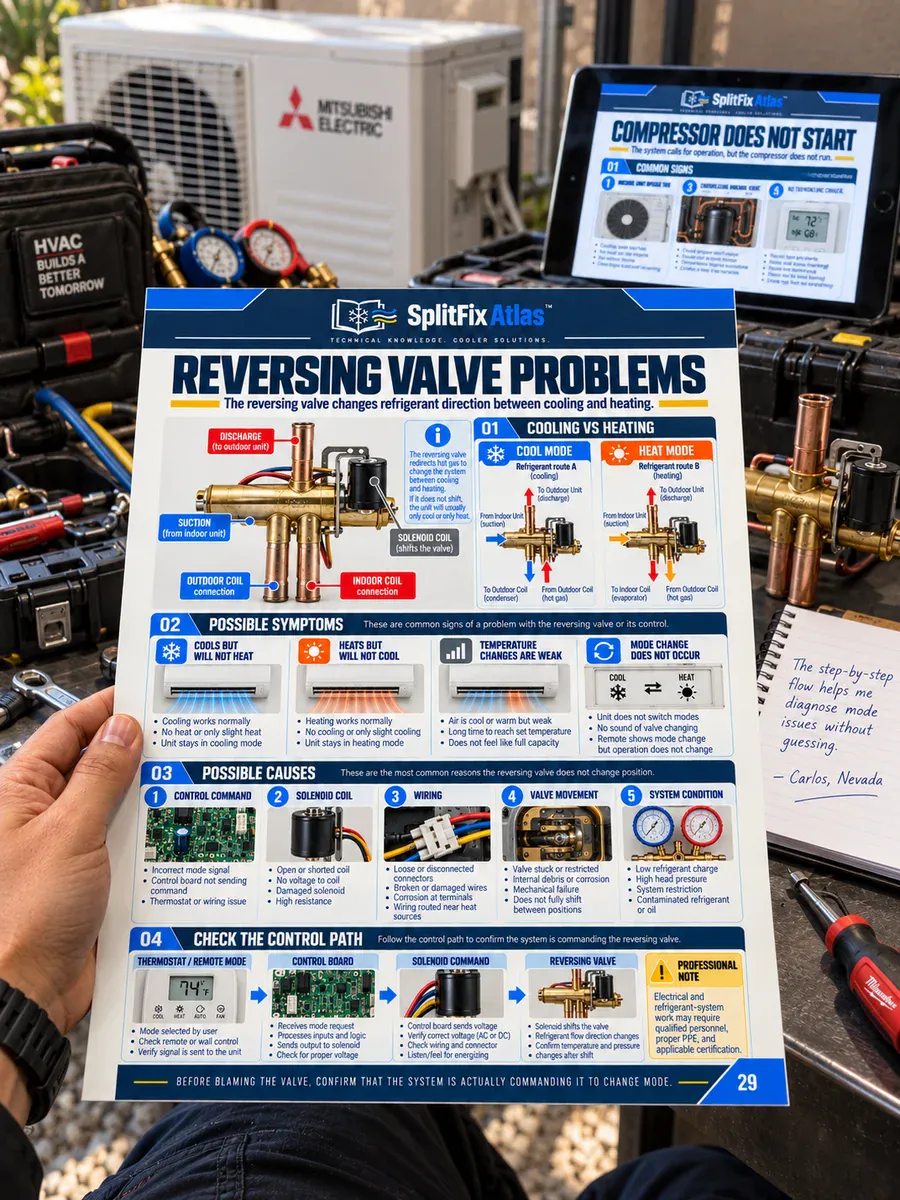
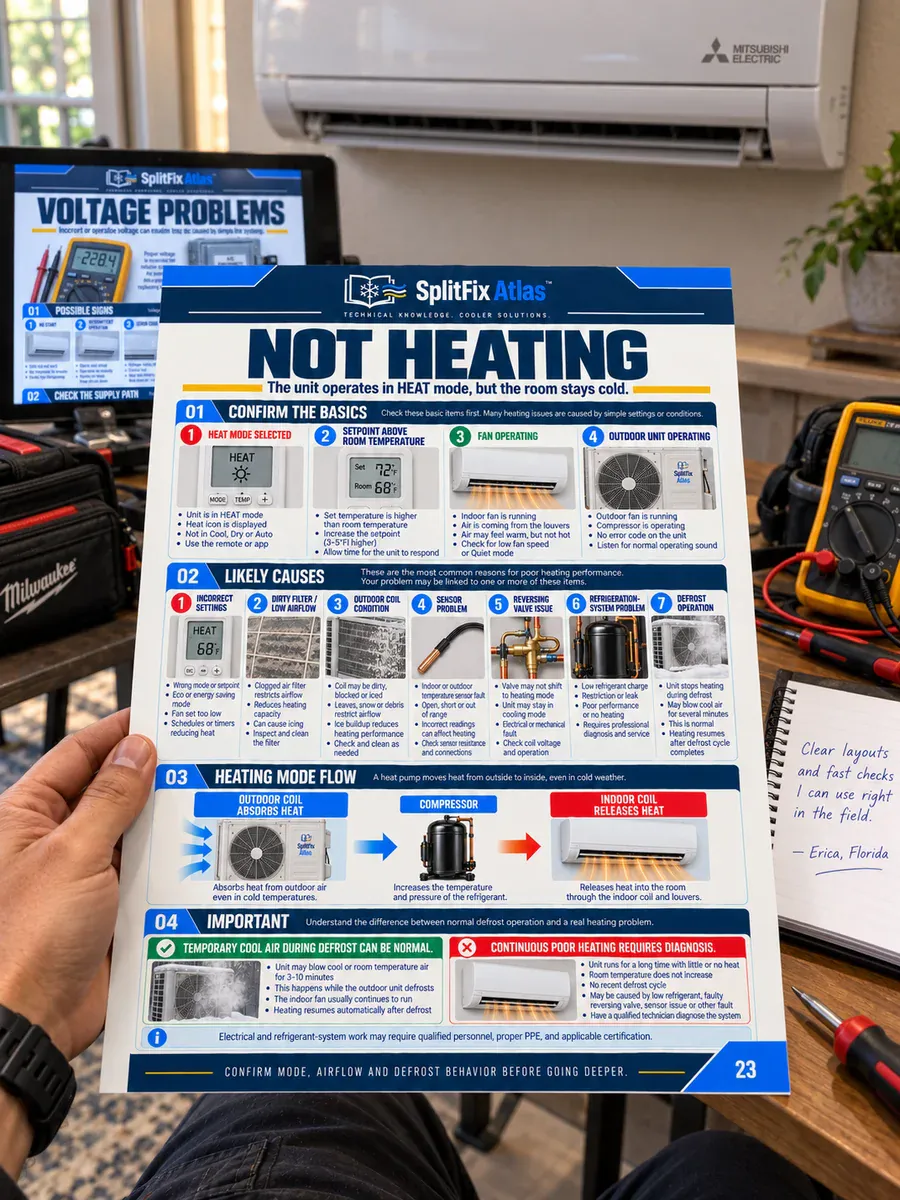
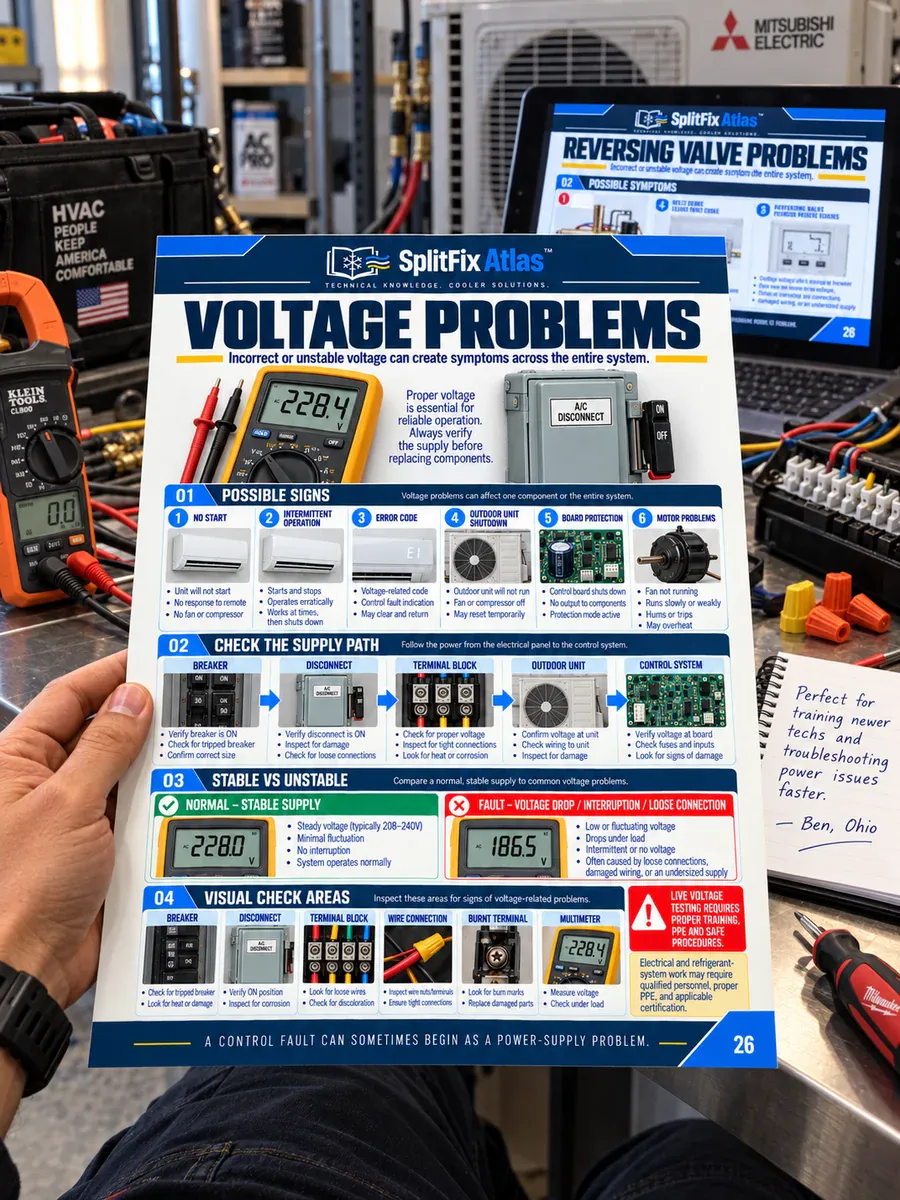
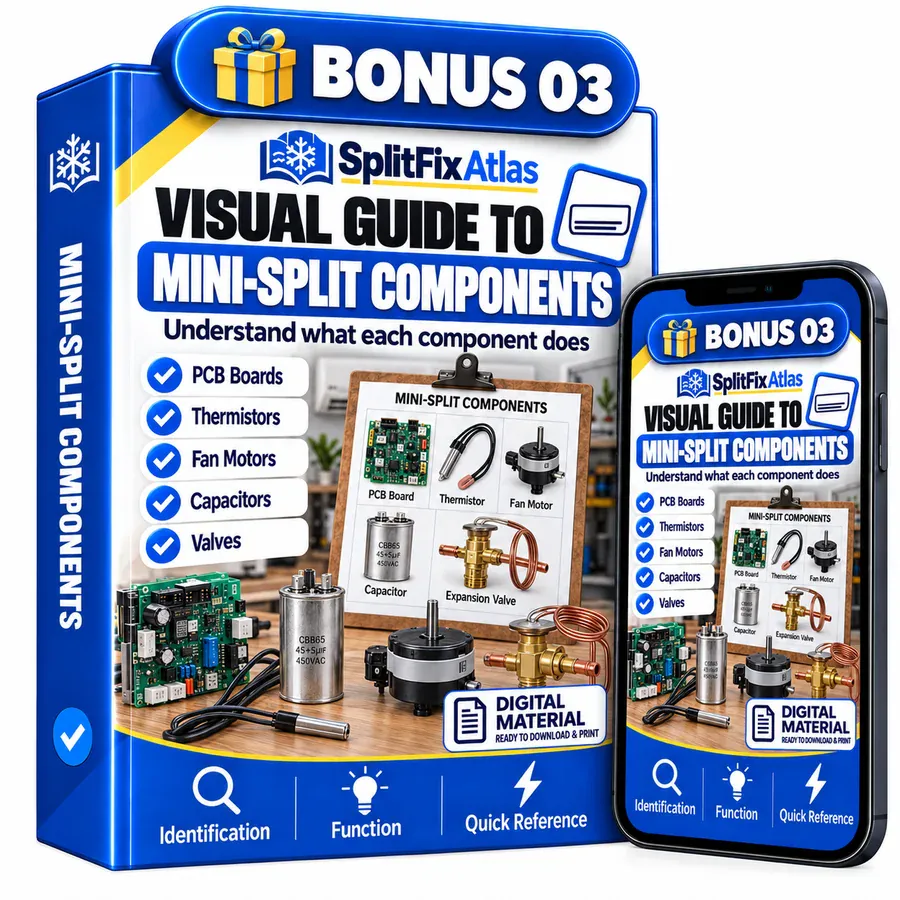
See the symptom, identify the most likely cause, understand what to check, and follow the visual repair path without wasting time digging through long technical manuals.
Instant digital access after purchase.
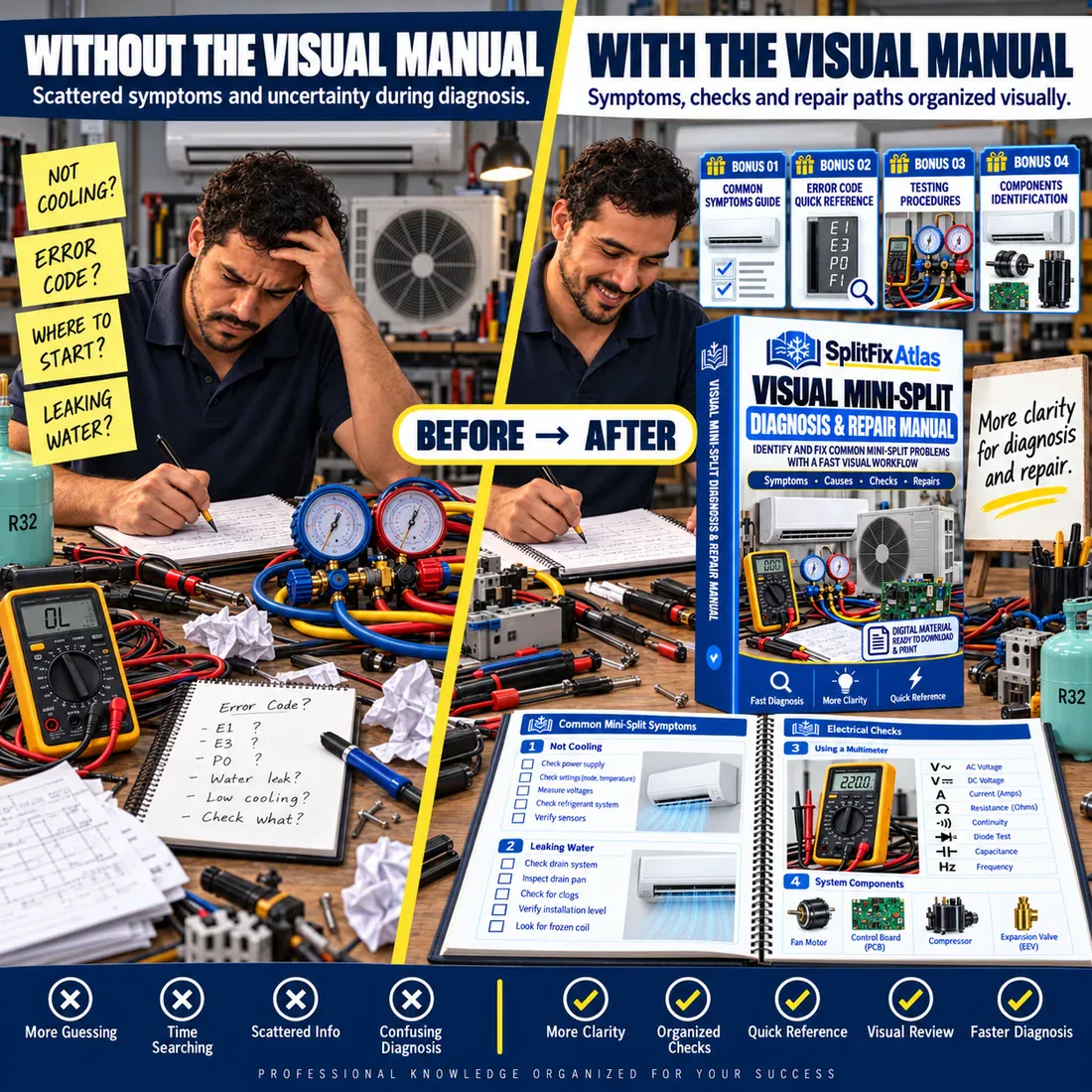
The unit isn't cooling, is leaking water, icing up, making unusual noises, shutting down, or showing an error code — but several different faults can cause the same symptom.
You know something is wrong, but you aren't sure whether to start with airflow, sensors, wiring, drainage, refrigerant, the control board, or the outdoor unit.
A small fault can turn into a long diagnostic process when you don't have a clear sequence showing what to inspect first.
Without a visual reference, it's easy to jump from one test to another, search through manuals, watch random videos, and still not know the next logical step.
Find the symptom you're seeing and quickly identify the most likely causes behind it.
See which components, connections, measurements, or operating conditions should be checked first.
Follow a visual diagnostic sequence that helps you move from symptom → cause → inspection → repair path.
Keep a practical reference available whenever you need to diagnose, review, or work on a mini-split system.
SAMPLE TESTIMONIAL LAYOUT — REPLACE WITH VERIFIED CUSTOMER REVIEWS BEFORE PUBLISHING
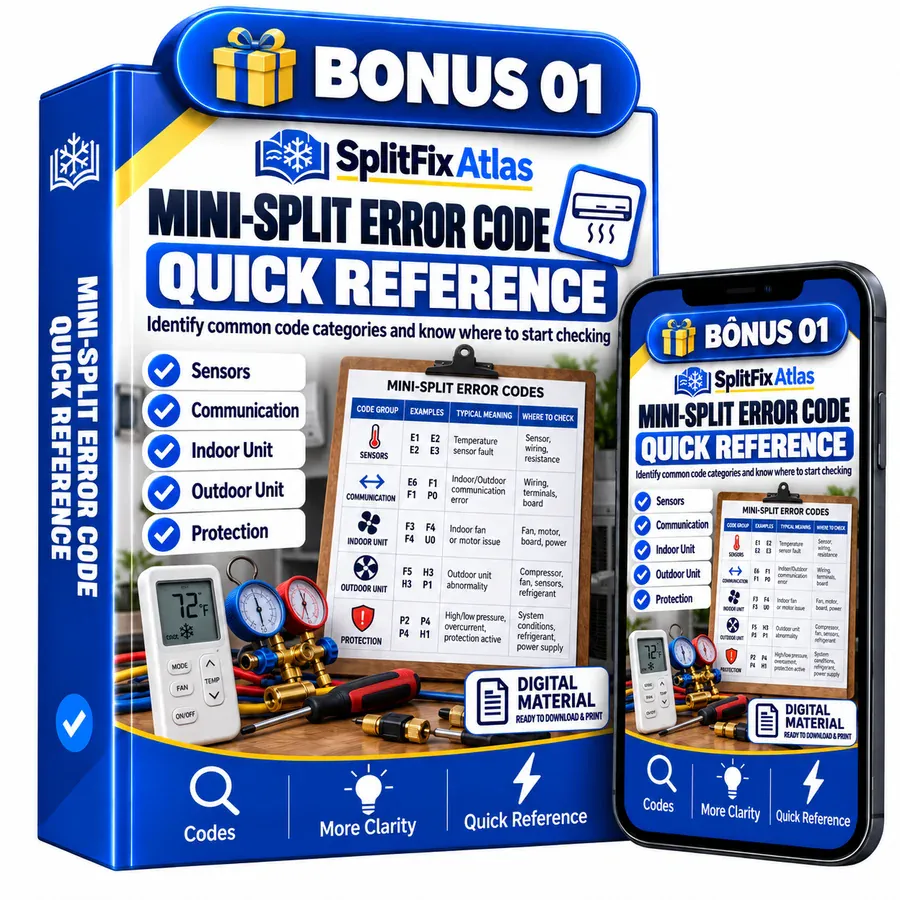
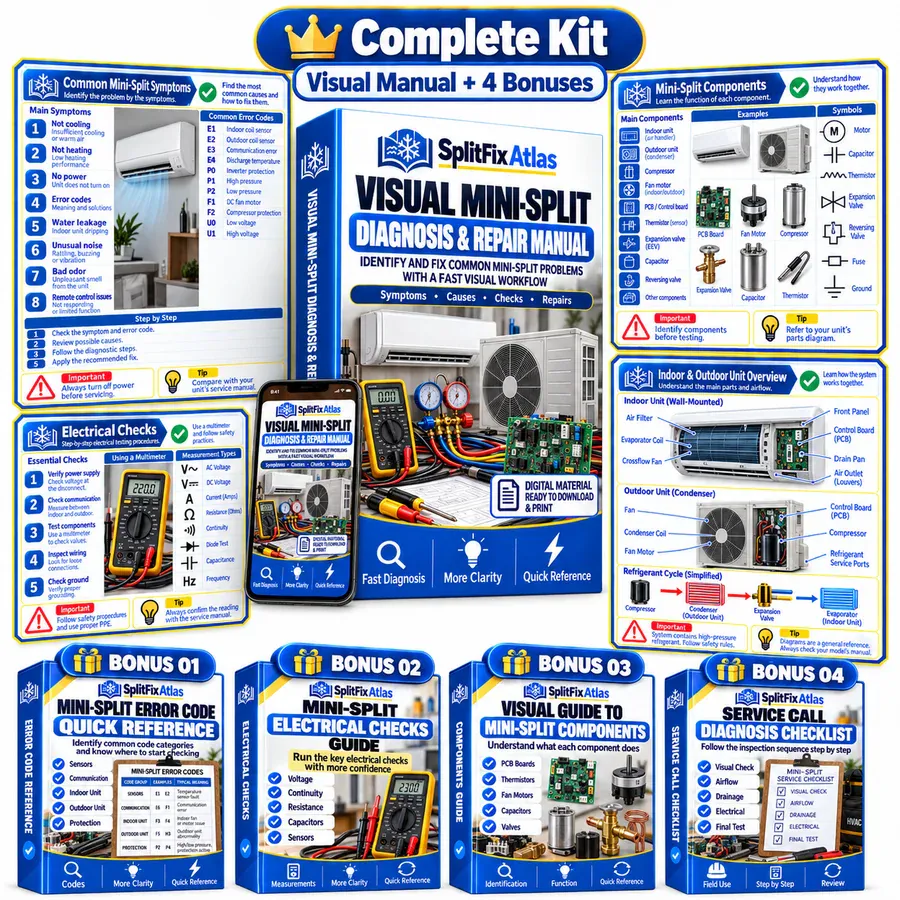
A fast visual reference to help you organize common error-code categories and understand which system area should be checked next.
Error Codes • Sensors • Communication • Indoor Unit • Outdoor Unit • Electrical • Protection Modes
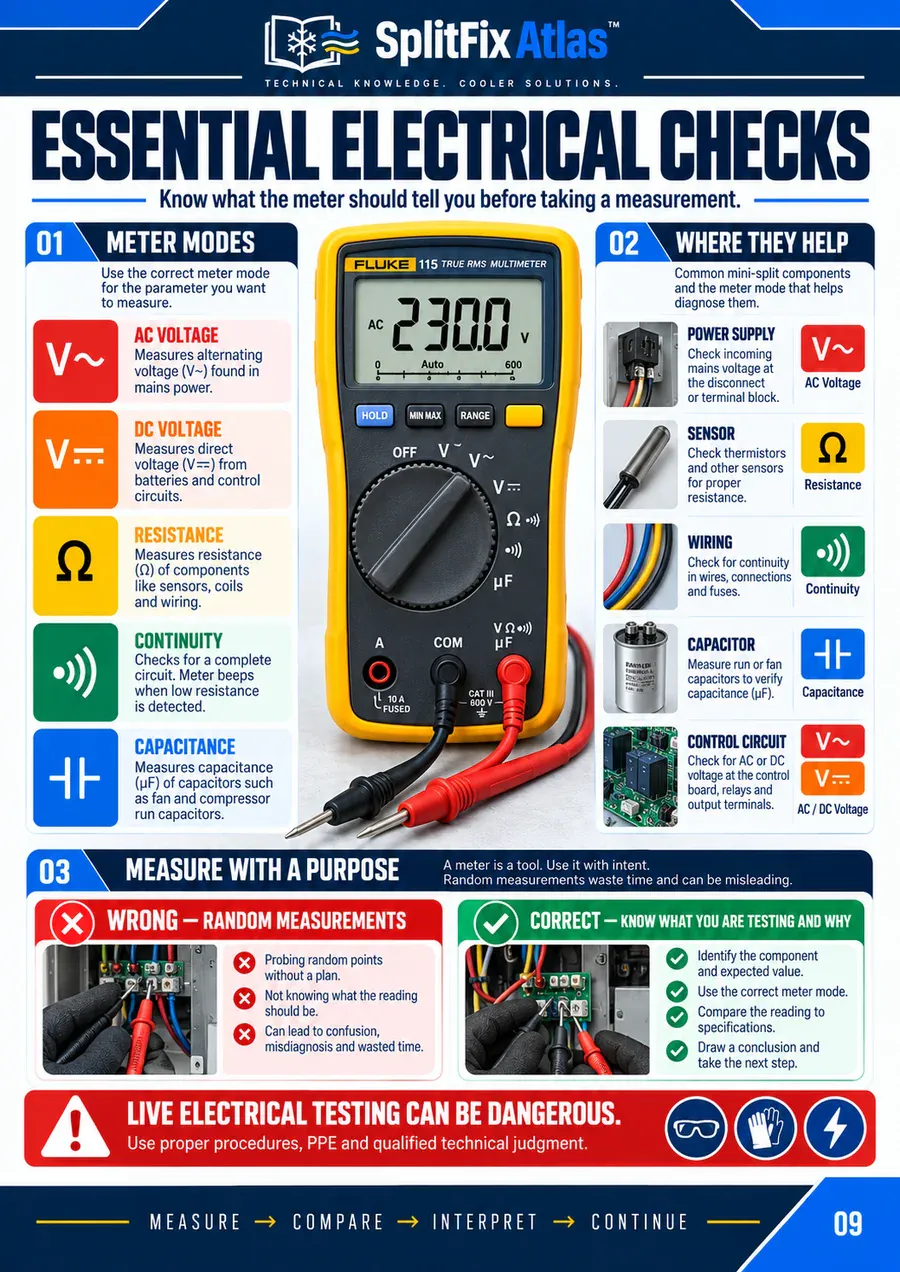
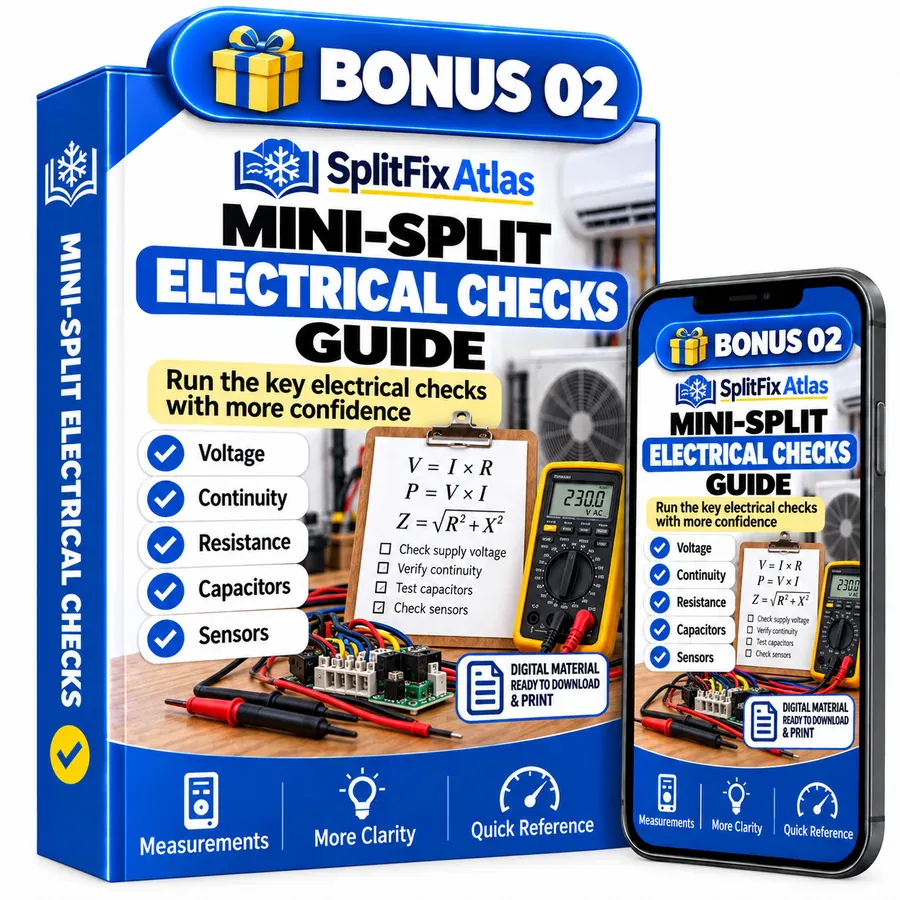
A practical visual guide covering common electrical checks used during mini-split diagnosis.
Voltage • Continuity • Resistance • Wiring • Sensors • Terminals • Boards • Connections
Compare common performance symptoms with possible airflow, refrigeration, heat-transfer, coil, and system-operation causes.
Weak Cooling • Icing • Low Airflow • Warm Air • Coil Problems • Restrictions • Refrigeration Clues
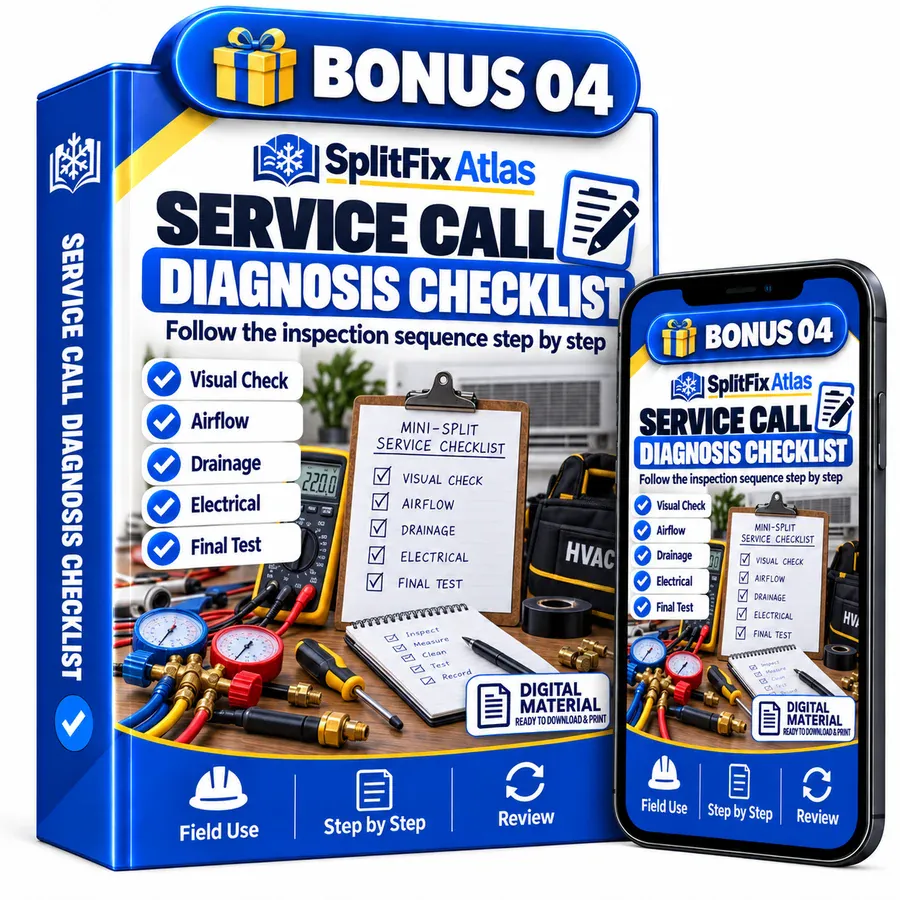
A quick inspection sequence to follow before and during troubleshooting so you don't skip basic checks.
Visual Inspection • Filters • Airflow • Drainage • Power • Wiring • Sensors • Outdoor Unit • Final Test
The Visual Mini-Split Diagnosis & Repair Manual + 4 Quick-Reference Bonuses
$14.99
ONE-TIME PAYMENT
Secure checkout — Instant access — 7-day guarantee

🔥 Want the complete diagnostic reference? Get the Complete Kit and unlock all 4 additional field guides.
Access the material from your:
or simply:
Keep the manual open while diagnosing, reviewing, training, or working on a mini-split and quickly compare the symptom with the most likely causes and the next checks to perform.
You'll have 7 days to access the material and review the content.
If you decide the product isn't right for your needs, you may request a refund within the applicable period and according to the payment platform's refund policy.
Simple and straightforward.
It was designed for HVAC technicians, mini-split installers, maintenance professionals, and trainees who want a fast visual reference to organize mini-split troubleshooting.
Yes. The visual, symptom-based format makes it easier to follow, even if you are still building experience. Hazardous and regulated work should only be performed by qualified individuals.
Yes. It is organized so you can quickly look up a symptom, review the likely causes, and see what to check next while working.
After your purchase is confirmed, you will receive the digital access information by email.
Yes. The entire manual is focused on ductless mini-split systems, including indoor and outdoor units.
Yes. It includes common symptoms and diagnostic references that apply to inverter mini-split systems. Always consult the manufacturer service documentation for model-specific procedures.
Yes. Each symptom is connected to the most common likely causes, so you can narrow down the problem before checking unrelated parts.
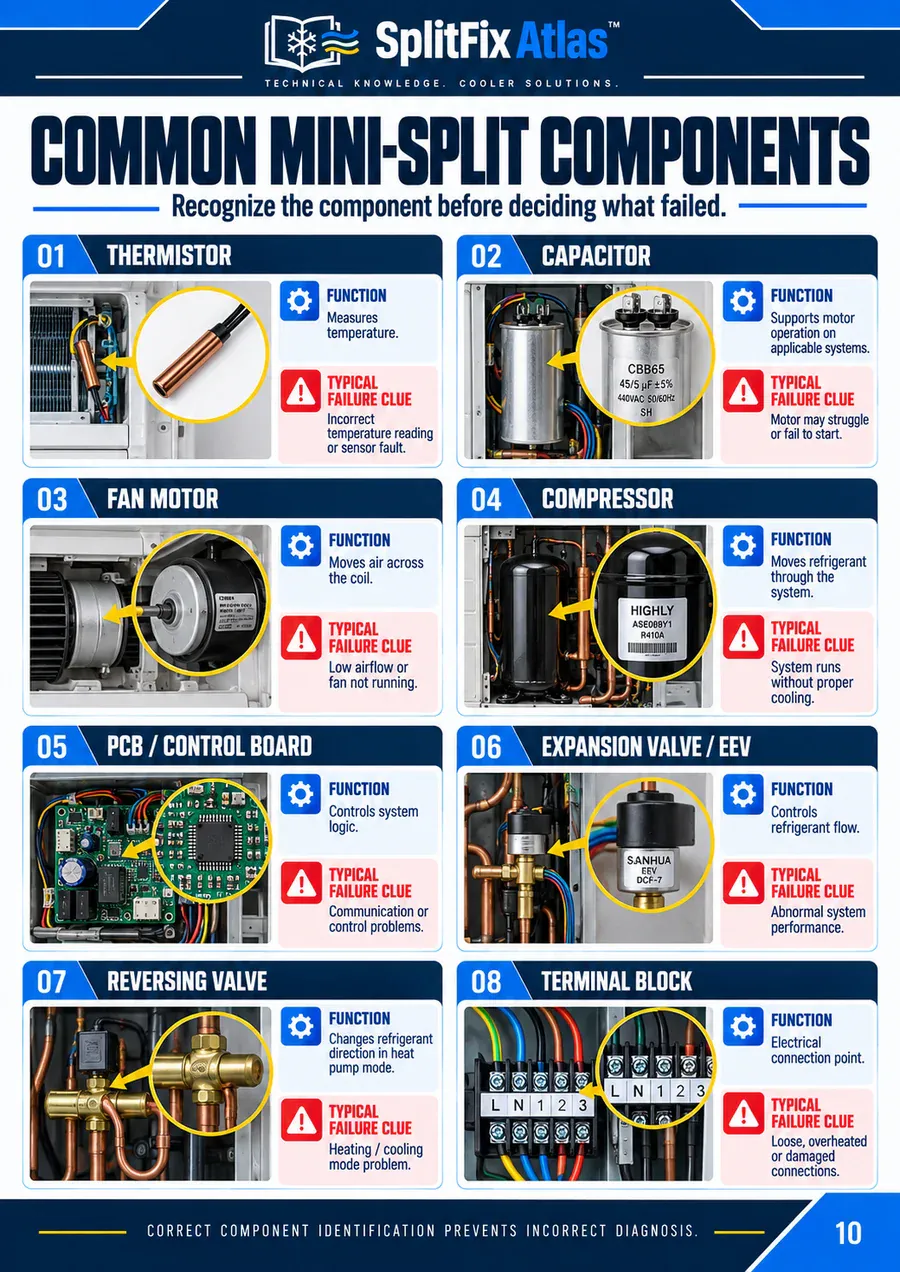
Yes. The manual shows which component, connection, reading, or operating condition should be inspected first.
Yes. It covers weak cooling, warm air, poor performance, and related airflow and refrigeration clues.
Yes. It covers dripping, clogged drains, incorrect slope, condensation, and water buildup.
Yes. It includes common causes behind ice buildup on coils and related components.
Yes. It reviews common electrical checks involving power supply, wiring, terminals, capacitors, control boards, and connections.
Yes. Sensor problems, wiring issues, and communication faults are included.
Yes. It covers common faults involving compressors, fans, coils, wiring, sensors, and outdoor-system performance.
Yes. It helps you understand which system area to begin with when an error or protection condition appears. Specific code meanings vary by manufacturer, so always confirm with the unit documentation.
Yes. It shows which area may require cleaning, adjustment, reconnection, testing, replacement, or further professional diagnosis.
Yes. You can keep it open on your phone or tablet, or print the pages you use most, while following all applicable safety procedures.
Yes.
Yes. You can use it digitally or print the pages you use most often.
No. It is a visual diagnostic reference. Always follow the manufacturer service documentation and equipment-specific instructions.
No. It is an educational and technical reference resource and does not replace professional training, required certification, or qualified technical judgment.
No. Refrigerant handling and sealed-system repairs must be performed only by properly trained and legally qualified individuals. EPA Section 608 certification may be required in the United States.
No. It is a one-time payment.
Yes. You have a 7-day guarantee according to the payment platform's refund policy.
See the symptom.
Identify the most likely causes.
Know what to inspect first.
Follow a visual diagnostic path.
And understand which repair direction makes sense before wasting time checking unrelated parts.